W E Patterson's avatar

…wondering…a salesman’s last night on earth…

On Saturday night, Tulip called me from L.A. Some of you who have been reading EEOTPB since the beginning remember her. She is an old friend of mine who moved from Florida to California several years ago.

She asked if I could find a poem that I wrote ten or a dozen years ago. It was about a close friend of hers.

I found it.

———————–

…wondering…a salesman’s last night on earth…

…I’m wondering how it is tonight,

Out on Bass Lake, and out in Spirit Lake,

And in Grand Lake and on the Great Salt Lake,

Down in Lake Charles and out on Lake Shore Drive,

How is…

The tiny girl named Janie from the Woodsmen,

Is she making out tonight?

Did she save the napkin, or the night, or the dream,

Would we have made it without screaming, just us.

How about the others, like,

The young hooker with her scrubbed cheeks,

Loaded on George Dinkel and telling me once again,

That she had found her love and was returning,

To Pomona to attend Community College with,

Her friend from the dance company…

…nurse comes in to reload the morphine drip.

…was there a fight in Juarez, or was it the girl Cynthia,

I was waking up in the back seat of a cab – on,

The Stanton Street Bridge at dawn,

Wondering if that call had been from Harry,

Back at the Sioux Falls plant. Not caring then,

Not me because of the tremendous high.

If we sold another six hundred thousand,

Color television chassis south of the border,

I could not have cared less…or more.

I love the figures, but not the change,

Just the bottom line people back at the office,

They love when the numbers fly by quickly,

But not me…too much road time to care,

My concern is for the common people,

They say…

…they say I won’t last until dawn

…and I think of her, a young lady married to a man

Who couldn’t keep a job, and who drank each night,

Until he was oblivious to her and her cares,

Dawn. What a name for such a lady -such a timid name.

The last part of the night, the darkest part, will take him,

That’s what they say behind the curtain.

But I wait here, shackled like a tethered brood mare,

Chained to the misery of my last night on earth.

“Give ‘em Hell Harry,” I exclaim to no one in particular,

And I watch dawn break over Kansas City.
W E Patterson's avatar

Not much sun in the Sunshine State

For many of us, life is a set of mundane daily activities that distract us from world events. We trudge through our days, thinking that in the end our efforts will be rewarded. We think that our good deeds will bear fruit. Similarly, we believe that misdeeds will result in some sort of punishment. I’d like to think that the terrible person in the white Nissan that cut me off yesterday on I-95 will somehow suffer for this affront by having something bad happen to him, or her (nothing really bad, like an accident or anything, but something sort of bad like getting stuck in the drive-up at the bank for 45 minutes). But then something will happen that reminds me that this may not happen, because the world is not a fair place to live. The driver of the white Nissan may be, at this very moment, cashing in a winning lottery ticket

Saturday was one of those days for me – a day that something happened to remind me of how unfair the world can be. Here in South Florida the weather was miserable. Tropical storm Chantral had fizzled off of the coast, and was crawling northward. By mid morning, heavy storm clouds had gathered, as if to foretell events unfolding in a courtroom in Central Florida (okay, so now you know where this blog post is going). By mid-morning I had cancelled my outdoor activities, as lightning crackled across the sky in one menacing bolt after another. The Weather Channel said that the front would pass by 1 PM, but that didn’t happen, and by 3 the rain was coming down in torrents. Around 4, an explosion not unlike an artillery round being fired went off behind my house, and the power for half of the neighborhood went down as lightning struck a nearby transformer.

By six, after my wife finished her workday, we sloshed off to the bar at Cafe Med, a little place near the Deerfield Beach fishing pier, a block off of the water. Yup, you guessed it, not lots of people at the beach. The place was nearly empty. A few tourists (don’t ask me who vacations in Florida in July) were at the bar, and from the sounds of things they had been there for quite some time. A couple of locals sat at the bar staring grimly at the TV, which was tuned to live coverage of the George Zimmerman trial going on up in Orlando. The volume was muted so everyone was carefully monitoring the closed captions scrolling past.

At that time, the jury of six (Florida felony trials require only a jury of six), had asked for clarification of what constituted ‘manslaughter’.

“They are going to find him guilty of manslaughter,” said my wife. “That’s all he’s going to get, I just feel it.”

“I dunno,” I said. “I think he’ll walk.”

“No,” said my wife. “He killed that kid…that unarmed kid…he can’t just walk away free…can he?”

By the time we got home later in the evening, the rain had subsided, although sheet lightning flashed in skies over Miami forty miles to the south. Eventually, a Florida Power and Light crew arrived to fix the power problem, so for a bit we were distracted from the Zimmerman trial, as we watched a power company worker reset a giant transformer fuse while standing on the ground using a 35 foot pole – ah modern technology.

Sometime around 11, my wife received a text message from her sister in Philadelphia.

“Oh no,” she said. “It can’t be true – he’s been found innocent!”

And so it goes here in the Sunshine State. The predicted riots that would erupt in the wake of an acquittal did not occur, although today there are some reports of riots in Los Angeles. Locally though, there were protests, and lots of tears, but they were peaceful protests, as the reality of what had happened began to sink in.

Today, conservative rock star, gun advocate Ted Nugent has weighed in with a predictable comment, calling Zimmerman’s action “the purest form of self-defense there is“.  Really Ted? Shooting an unarmed man is pure now?

The talking heads on the morning shows still speculate on the verdict, and today the first juror has spoken. There will probably be an upcoming civil trial, and George Zimmerman will undoubtedly wish that he were somewhere else that night of February 26, 2012. Trayvon Martin would certainly wish the same – if he only could.

As time goes on, we will discover more about the jury’s reasoning in finding Zimmerman not guilty. I imagine that Florida’s controversial ‘stand your ground law’, which pretty much makes it possible to gun down anyone whenever you feel threatened, is to blame. That, a six member jury, and some very good lawyering on the part of the defense probably were responsible for Zimmerman’s leaving the courthouse a free man.

To all, stay safe, and to my fellow Floridians, keep our laws in mind when your ire is roused by errant drivers, or that rude guy who edges his cart ahead of you at Publix. Remember the fine line that we have drawn in our sand – we might be but one altercation away from finding ourselves in Trayvon Martin’s shoes.

Mahalo

–Ed

W E Patterson's avatar

My post vacation thoughts…

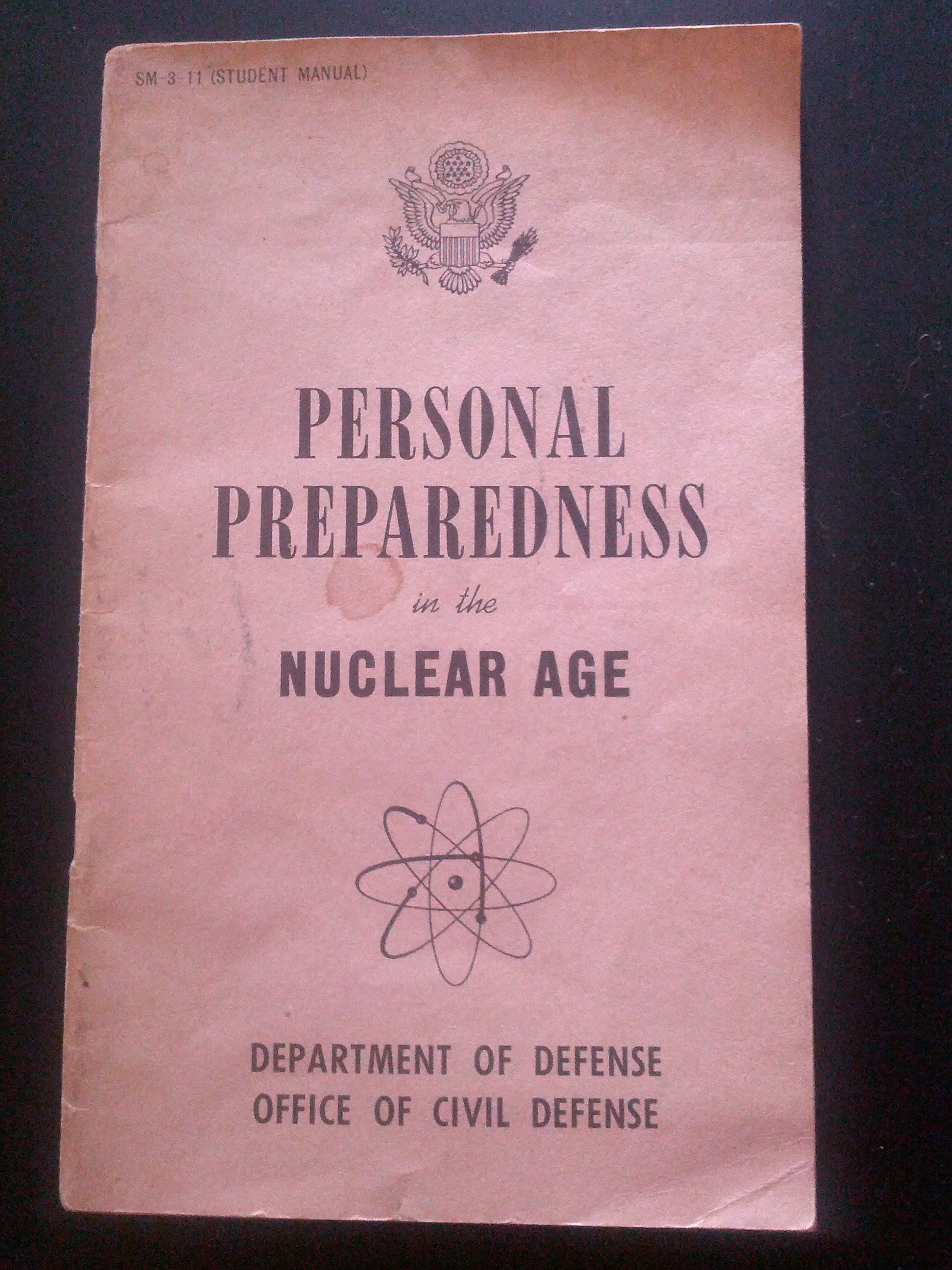
civil_defense_manualThis blog has suffered greatly these past couple of weeks, as professional demands, as well as lack thereof, have taken a toll on my writing schedule. Translated, that means that after working like hell for quite a while, I went on an eight-day vacation and didn’t write a line. Seldom do I vacate for eight entire days, but this year was an exception, and although I did not travel far (only 125 miles up the Florida coast), I was officially, ‘away’, and when I am ‘away’ I try not to touch a computer keyboard. This year I almost made it through without touching fingers to keys, and if it were not for the need to post an item for sale on Craigslist, I would have succeeded in keeping my vacation ‘computer free’.

I also try not to watch too much network news. I mean is there really any need to be completely informed on all matters at all times. Since there is little threat these days that ‘The Big One’ will be dropped on us at any time, I see no need to stay connected to international affairs 24/7. I recall reading a Civil Defense book that we had in our home when I was a child. I remember the chilling photos of the mushroom cloud rising over a distant city, as a family hunkered down in their well stocked fallout shelter, hopefully safe from annihilation in a wake of a gazillion megaton nuclear blast, that in reality would have vaporized them along with their supply of canned tomatoes and bottled water.

This particular Civil Defense guide went on to suggest that farmers take transistor radios to the fields with them during times of international tension, in order to monitor unfolding events. Presumably, they would be able to get the tractor tucked safely in the barn, should a flight of ICBMs be tracked coming in over the pole. Ludicrous indeed. As time went on, and the sixties unfolded into the seventies, these Civil Defense guides disappeared as we all accepted the grim reality that in event of such a man-made doomsday, there would be few, if not, any survivors.

Today, we seem to have little to fear from sudden and complete annihilation of the North American continent, however, our lives seem to be no more or less safe from destruction by events beyond our control.

The Orlando, Florida television stations, in the beachside community where I spent last week, preempted local news in lieu of live coverage of the George Zimmerman trial. Zimmerman, the armed community watch volunteer who seemed to go prepared for trouble, found it, and dealt with it using deadly force, is on trial for (what is effectively) his life. Meanwhile, the distraught family of the unarmed teenager felled by his bullet plead for justice. So it is a dangerous world, where walking in the wrong place, at the wrong time can mean deadly consequences. We are an armed nation, and there are lots of people packing heat and not afraid to use it – or maybe they just use it if they are afraid, who knows. Fortunately, this trial is coming to a head, and shortly justice will be served – hopefully.

Word of the tragic death of 19 Arizona firefighters came to me not over a network news station, but via The Weather Channel (TWC), as I tuned in one morning to ascertain whether or not the line of storms off of the Atlantic coast was a threat to the day’s fishing. I immediately turned to an NBC news report, delivered over my phone.

Finally, the crash of an airliner in San Francisco distracted me from fishing and beach.  As I paused to think for a moment about the two young girls who lost their lives in this ‘routine’ flight, and to consider how vulnerable we all are as we shoot through the skies from city to city aboard a mode of transport deemed safer than driving. Unlike the crash of the commuter plane in Buffalo a few years ago, in which the experience of the pilots is coming into question, this jet from Korea to the US had four pilots aboard for this long-haul international flight. The fact that it could crash upon landing, on a clear day, after making a successful flight across the Pacific Ocean is beyond belief.

The cause of this crash will take aviation experts, of which I am not one, months to investigate before a cause is determined. What I do find interesting is the news media’s continuing disbelief that the shaken passengers took time to gather personal possessions (even duty-free bags), before exiting the burning aircraft, as if these oblivious survivors put Ipods and scotch above human life as they malingered to gather earthly possessions. More than likely, these passengers were is shock in the few minutes immediately after dropping onto that San Francisco runway. I wrote a bit about this several years ago in an article about surviving a plane crash. You can read it here if you like.

So that’s it for now. Vacation is over, and I am back working and blogging. I am thinking about the fragility of life. As a new tropical disturbance crawls through the Caribbean I find myself thinking of how quickly our situations can change. If we are alive and relatively healthy we should consider ourselves lucky.

Stay safe.

Mahalo,

-Ed

W E Patterson's avatar

Thoughts on Hurricane Season 2013

I have not blogged in a few days, having been tied up with paying pursuits. Before I went away though, I’d started a piece about the beginning of hurricane season 2013. It is quite an event for us in the tropics, so I guess I shall continue…

At that time, tropical storm Andrea was forming off of the West Coast of Florida, churning up deadly rip-currents, tornadoes and floods. Andrea has sinced passed across Florida and raced up the East Coast toward the recovering shores of New Jersey, after which, she went on up to New England before finally crossing into Canada, where she snuffed out power to about 4000 in Nova Scotia and New Brunswick.

Here on Florida’s Gold Coast – a good distance from Andrea, there was considerable storm damage. Considerable if you were one of the unfortunate few whose homes were destroyed by the Andrea spawned tornadoes. From Loxahatchee up in Palm Beach County, to Marathon down in the Keys, people felt the effect of Andrea, and it has caused plenty of us in this part of FLA to think back to 2005. We think about Katrina, who passed us by with just a slap of her hand across our cheek, before turning hell-bent into the Gulf of Mexico, gathering strength in the warm Gulf waters in order to do her nightmarish dirty-work on the low lying Gulf Coast, before she destroyed New Orleans.

A few months later in that same year, we felt the brunt of Wilma, a particularly nasty storm that churned up out of Jamaican waters in October, becoming the fastest Atlantic storm in recorded history to reach Category 5 status, going on to leave 62 dead and 28.8 billion in damages in her wake, making Wilma was third worst hurricane to hit the U.S.

Of course there were others – like Ophelia, the little tease that sat offshore for days, leaving South Florida beaches in tatters before finally turning her fickle attention to the Carolinas where she, in her own good time, devastated the coast from Cape Fear to the Outer Banks, racking up 70 million in damages and leaving three dead.

There are so many hurricanes rattling around in my recent memory it’s hard to keep them straight. There was Rita and Charlie, and Dennis, and a score of others. And then there were those  who didn’t touch our U.S. shores, but went on to devastate our neighbors to the south, in the Caribbean, and along the coast of Mexico. And then of course, as some of the ‘old timers’ will tell you, often in hushed tones — there was Andrew — the first storm of the 1992 hurricane season — Andrew the stalker, who waited until August 24 of that year to unleash his deadly fury, coming ashore on Elliot Key, before taking deadly aim on the mainland Monroe County cities of Florida City and Homestead.

So I was thinking of all of this the other today, as I was tinkering with my generator, gapping the plug and checking the fuel filter, digging in the junk drawer for D batteries and wondering if I have enough drinking water stockpiled should one of the projected 13 to 20 named storms head this way. I was also thinking about climate change and why we still have people who deny that such man made change is occurring – in spite of the fact that NASA and NOAA and the vast majority of the scientists in the friggin’ world agree that man made climate change is real and ongoing.

Of course, I realize that terrible storms have lashed the earth for eons. The Caribbean is, in fact, awash with sunken 17th and 18th Century Spanish gold, the ships carrying such treasure having gone down in dreadful hurricanes then unnamed. So there have been powerful hurricanes forever, but could it be that things are becoming more extreme?

In my native Midwest, a 700 hundred mile long ‘derecho’ recently formed. A terrible windstorm that wreaked havoc from the Mississippi River all the way to the East Coast of the U.S. A derecho (derecho being Spanish for ‘straight’) is somewhat the opposite of a tornado, which is a twisting wind.  Derechos are, therefore, a big straight wind – sort of a land hurricane. Derechos are  nothing new either, the first recorded one occurring in Iowa in July of 1877. I am sure that there were countless ‘big-straight-winds’  in the countless centuries that followed the last ice age, some fierce and deadly. But I don’t recall 700 mile long derechos. Nor do I recall tornado shelters in Des Moines shopping malls like they have today (not that it’s such a bad idea).

So now, those of us in the tropics turn a wary eye to the Weather Channel’s Tropical Update. Later in the season we will watch the tropical waves tracking off of the coast of Africa, each wave micro-analyzed with the latest high tech equipment and satellite imagery, and we wonder how we ever survived without 24 hour cable, let alone television itself.

Meanwhile our friends in the Heartland remain vigilant for more deadly storms dipping down from the clouds, recent memory of the tragedy in Oklahoma fresh in the minds of all, while along the Jersey Shore our family and friends now draw an uneasy breath in Andrea’s wake, the painful memory of Sandy still fresh in their minds.

Keep an eye to the sky and stay safe.

Mahalo,

–Ed

W E Patterson's avatar

A technical writer looks at fiction…

A few years ago, at a Society for Technical Communications (STC) conference, I ran into a colleague who has achieved a good deal of success in the field of technical writing. My friend started her own technical documentation business, and the last time I spoke with her she had a number of writers on staff at her Atlanta, Georgia office, offering not only technical writing services but technical training as well. She had clients from Fortune 500 companies, and provided in-house training classes to clients around the world. In addition, she had gone on to author a number of commercially available books directed at technical writers.

On the last day of the conference, we met for coffee at an outdoor cafe at Baltimore’s Inner Harbor. After talking about her most recent project, which was authoring one of the famous ‘____ for Dummies’ books, I told her about my latest fiction writing project. Awkward silence descended upon the espressos.

“So, how is your project going?” she asked.

I told her that I had done an outline of the opening chapters and I had found some good info on the internet on how to format a novel. Then I told her that I had started a milestone chart in Excel and that things were on schedule. After that, I noticed that she was smiling at me.

“I’ve never been able to do it,” she said to me (finally).

“Write fiction?”

“Yes,” she said. “I have tried many times but I just can’t do it. I go for one or two pages and then I start formatting, and then I go back and read it and I don’t like it. Finally, one day, I gave up. I realized I couldn’t do it. When I went back to writing technical documentation, I felt…so at home. I need bullet lists and procedural steps…you know, don’t you?”

I said that I did understand, but needed to press forward writing fiction.

“You are wasting your time,” she said to me as she got up to leave. “But give it your best until you get it out of your system.”

A few hours later, I flew home to Florida, reading Alice Orr’s book, “No More Rejections” the entire way.

W E Patterson's avatar

A death at the Super 8

I have always felt that we need to do more for the men and women who have served our country. Or at least we need to do more than we are doing. Some years ago I wrote a poem about a vet that I knew. He was a Vietnam vet who came back from that war with a purple heart and little else. He was a friend, and his story touched me deeply. I wrote a poem about ‘Roger’ (full disclosure – not his real name).  Because this is Memorial Day weekend here in the United States, or ‘Decoration Day’ as my granddad, a World War I vet used to call it, I want to post this poem in ‘Roger’s’ honor.

A Death at the Super 8

Roger died at the Super 8, out on the edge of town,

Nobody left to bury him, his family long since gone,

His friends had all abandoned him, since he’d started talking strange,

Muttering about conspiracies, and weird lights out on the range,

Someone killed the Kennedys, and it ain’t who you’d think,

He told me in a local bar, after I had bought him his third drink,

Lots of things are going on, and the Feds are in the know,

Murders and black helicopters, drugs and UFOs,

He told me he heard people, whispering in his ear,

About the second coming, and it was happening next year,

He spoke in tongues, slept in the rain, and turned a ghastly pale,

A couple times he scared some folks, and ended up in jail,

The people who were close to him, all started to get scared,

So they started to avoid him, and they forgot they ever cared,

The welfare folks they finally found, a place where he could stay,

So he moved into the Super 8, and made the county pay,

But me and seven other guys, from the local Legion hall,

Turned out to see him buried, on a windy day last fall,

An Episcopalian preacher, who’d known him all his life,

Said Roger was a gentle man who’d always loved his wife.

He said it started years ago, when he couldn’t pay a loan,

A banker came down from Des Moines and took away his home,

His wife she moved to Keokuk, his son lives in Moline,

I heard he has a daughter too, but for years she’s not been seen,

He said he’d fought back demons, but now God would settle up the score,

And take away the agony of a man, who’d gone to war,

That night from fitful sleep I rose, and poured a shot of rye,

And drank a toast to Roger, and strange lights up in the sky.

W E Patterson's avatar

Rainy Thursday Afternoon

After my shift ends at the bakery I walk uptown.
It is early afternoon.  I stomp up Front Street in flour stained boots.
Eventually, I kick off the bread-dust.
I ignore the burn on my left hand – it is of my own doing.
In time, I shake off the day and the bread too.

It is half past two, and a storm is racing in from the western slope.
So I have three hours to kill – Leah is still counting parking tickets downtown.
She works at the Department of Revenue, and she is busy extracting coins.
She takes them from yellow envelopes and puts them into grey bags.
She accounts for those who have paid their debt to parking society.

A guy I know named Pearson – a man who hasn’t worked in many years,
But who is truly a good soul, calls to me from the doorway of the Timberline Tap.
He says because it is so early, I should come in and drink with him.
I tell him that I can’t today – Aunt Olympia must remain bound and shackled.
He laughs. I tell him I have errands to run, but that is a lie.

Further up, I stop at a market and I buy green grapes from a man named Carlos.
He knows it is Thursday, and I don’t work on Thursday afternoons.
He asks me about the bakery and if there is any work there for a grocer.
He says I have flour under my nails and he wonders if it ever goes away.
It is a matter of time and money I say, and he smiles like he knows.

Up at the Bellevue Bookstore, the Russian owner – I don’t remember his name,
Barely looks at me when I enter the store. I move past him.
I hurry past the ordered shelves:  I head for the mess in back.
I shun the shelves of paperbacks, and the weighty, and the out of print.
I turn left at the “Native American History” section.

In the back, by the window that faces west, I find the poetry section.
The shelves are barely as wide as I am. I look at the books, afraid of commitment.
I select a narrow one – the slimmest one. I pull up a wooden stool.
Fresh drops of rain from the mountains peck at the windows above my head.
I eat green grapes and read from the slim volume.

The Russian comes by pushing a load of used books in a cart.
He says his favorite writers are Russian, and he tells me about his father,
Who was a great reader, as well as a good communist.
But his father was dead and his mother too and even his own wife.
And the Bellevue Bookstore was all that was left of a capitalistic experiment.

He thinks I look like the Bohemians he knew in Seattle,
In the days he lived there with his wife, before he bought the Belleview.
And he says I should take my own wife and go away while I still can.
He thinks that a man of my years should live nearer the coast.
Too much mountain air thins the blood.

I nod, but I have no desire to move away – but I don’t tell him.
Trotsky, the bookshop tabby curls up at my feet – strange how I recall his name.
Rain pounds at the windows and I settle back against the wall.
I am content with my slender volume of poems, just for Thursday.
I am content with my grapes, content with Leah and the rain.

W E Patterson's avatar

Is the short story dead?…

According to many literary insiders, the short story, along with the poem, has now officially flat-lined, the obituary that was written a decade ago, now soon to be published. I’m not sure that I agree exactly, but if the short story is not dead, then it is certainly prostrate on the gurney with the emergency team gathered, paddles held charged and ready.

Ted Genoways wrote a great piece in “Mother Jones” a couple of years ago regarding the imminent death of the short story. You can read it here. Genoways brings up lots of good points about the demise of the university literary quarterly, as well as the drying up of the short story market, as national magazines, such as The Atlantic, GQ, Playboy and Redbook (among many others), have moved away from publishing fiction.

Genoways also tells of Wilbur Cross, a Democrat who was remarkably elected governor of Republican dominated Connecticut in 1930, riding to victory based upon his credentials as an editor of the Yale Review. It is hard to imagine such credentials holding similar sway in an election today. Cross did not relinquish his editor’s post at Yale Review during his tenure as governor, and he remained dually employed throughout his four terms in office. When asked how he was able to perform both jobs, he replied, “By getting up early in the morning.” (Perhaps related to Trollope, see my blog-post of April 23).

Frankly, I don’t understand this. According to all studies, our attention span is now measured in micro-seconds, so it would certainly follow that entertaining fiction, especially collections of good short stories would fill a void. You’d think that people, especially young people, would be shying away from the 200,000 word novel in favor of a shorter length of work that would afford more immediate gratification – but not so apparently.

I went searching for a good volume of recently published short stories by an up and coming author who was actually selling books. To this end, I came across a book that has received quite a bit of acclaim. The Tenth of December by George Saunders met my short story criteria. Unfortunately, I don’t believe that this book is going to revive the short story, and it may in fact serve to hasten its demise. First of all, Mr. Saunders, a professor at Syracuse University, is an excellent writer. And to be quite honest, I started out liking this book, and for a short while, I was ready to have the short story moved from the gurney into ICU.

The first story in the collection, “Victory Lap” was great. It is a story about a young man who overcomes smothering parents to rescue a girl from the hands of a serial killer. After that point the remaining stories were too dark of me, and one caused me to bail after only half a dozen paragraphs. Don’t get me wrong, the stories are imaginative and were obviously crafted by a talented artist, but as I said – too dark for me. I would say forget about this book, had it not been for the final story in the collection, the story that gave the book its name: The Tenth of December.

Saunders obviously saved the best for last because this was a beautifully crafted short story. To fame it briefly, the story is about a cancer patient who goes out into the woods to commit suicide but instead finds a child in desperate need of help. So the book redeemed itself in the end.

An acquaintance of mine who has published a couple of novels tells me that he used to write short stories, but there simply isn’t enough money in it today for a professional writer trying to pay the rent. He finds that by the time he puts together a couple of good salable short stories to sell on the currently faltering fiction market, that he could be a third of the way through a longer work from which he could make more money.

So far, I think the short story is not yet dead, but how long can this literary artifact hang on is difficult to say. If you have a favorite short story author, or collection of stories, please feel free to comment. (Feel free to comment anyway.)

That’s it for me today,

Mahalo,

–Ed

W E Patterson's avatar

The High Line Drifter’s Lament

April is National Poetry Month, so I want to post a couple of pieces of poetry that I have written. These poems have all appeared elsewhere. This poem, The High Line Drifter’s Lament, is one that I wrote several years ago. The High Line is a railroad freight line that runs between Seattle, Washington, and Minneapolis, Minnesota, in the United States. It passes just south of the U.S., Canadian border, and crosses the states of Washington, Idaho, Montana, North Dakota and Minnesota.

Back during the 1980s and 1990s, the High Line was terrorized by a gang called the “Freight Train Riders Association”. This gang was responsible for lots of violence along this stretch of track, particularly in the state of Montana. People who illegally rode freight trains were fearful.

The High Line Drifter’s Lament

I was riding on the High Line, on a trip across the plains,

Passing south of Enumclaw, soaked from late night rains,

Riding fifteen hundred miles, across the northern tier,

Choking hard on cheap red wine, cursing hard the fear,

I got a second hand Hi-Standard; I keep it in my pack,

I sleep with one eye open, because I have to make it back,

An old timer told me in Spokane, while we were playing cards,

How thugs had come to terrorize the rails and the yards,

They found a man in Kalispell, a month ago today,

He didn’t have a home or name, but now he has a grave,

They’re rolling drunks, and killing men, and raising lots of hell,

Killing them that ain’t like them, and anyone who’ll tell,

They don’t give any warning, and they don’t make any sound,

They’ll shoot you dead and disappear before the bull’s next round,

So I take a chance, I check my piece, keep my back against the wall,

In thirty two more hours I’ll be with you in St. Paul,

By morning light this train will pass, from the mountains to the farms,

And I’ll be that much closer to the shelter of your arms.

W E Patterson's avatar

The relevance of poetry today…April is National Poetry Month…

A long, long, time ago — just after the Presidential Inauguration last January, Alexandra Petri wrote in her Washington Post blog, a piece generally directed at inaugural poet Richard Blanco, but more specifically aimed at the art form of poetry in general. I had intended to comment on her piece back in January, but I didn’t get to it, and I forgot about it until now. But, since April is National Poetry Month here in the U.S., I thought I would revisit her words and comment on them.

If you want to read Ms. Petri’s blog-post in its entirety, I shall provide a link here. For those of you who do not care for links, I will summarize some of her sentiments. She writes:

“Poetry has gone from being something that you did in order to Write Your Name Large Across the Sky and sound your barbaric yawp and generally Shake Things Up to a very carefully gated medium that requires years of study and apprenticeship in order to produce meticulous, perfect, golden lines that up to ten people will ever voluntarily read.”

While I don’t take issue with some of the points she brings out in her piece, Ms. Petri goes on to ask, “Can a poem still change anything?” To which I would answer that maybe it depends upon your definition of ‘change’. Perhaps poetry is not up to the task of making the wolves lie with the lambs, or encouraging the takers to become givers, or to opening the minds of the intolerant, but perhaps that is too large a task for any art form. Nobody is suggesting that novelists cease to novel, or painters cease to paint because something grandiose may not take place. Of course Ms. Petri isn’t suggesting that poets don’t write poetry either, but she is suggesting that it is no longer relevant.

When I was in the seventh grade, my English teacher assigned a poem to me on a Friday, and tasked me to learn the poem by Monday morning. The poem that I was to learn was Shelley’s 1817 classic sonnet, Ozymandias.  It was good training, as it was not to be the last time in my life that I would receive an assignment on Friday for Monday delivery. At the time, however, I had little interest in spending my weekend learning to recite poetry. But I did learn the poem, and I did recite it in front of my English class the next Monday.

In its brevity (14 lines), Ozymandias describes the temporary nature of life in a way that few tomes of doorstop proportion can equal. In this poem, a nameless narrator meets a “traveler from an antique land” who describes visiting what is believed to be the tomb of Rameses II in the Egyptian desert. The traveler ruminates upon an inscription on a statue, left by the once mighty pharaoh, which reads:

“My name is Ozymandias, king of kings:
Look on my works, ye Mighty, and despair!”

The last three lines of the poem describe the ruins of Ramses’ II’s tomb decaying in the desert – the impenetrable edifice built by the once powerful pharaoh slowly being consumed by the literal and proverbial sands of time. The meaning for us all being that the mighty will one day fall into decay and ruin and we shall all return to the dust of the earth, regardless of our station in life.

I can recite this poem to this day, and I find these words that Shelley penned so long ago both sobering, and in a strange way comforting. So in answer to Ms. Petri’s question, “Can poetry still change anything?” I should answer that in a small way it changed me, and the way I view the world around me

Of course, I realize that Ms. Petri is speaking more about today’s poetry and the state of the art today, and not really about old, long dead poets, and musty old poems committed to memory by seventh graders. I think she is talking about an entirely new breed of poet, and to her credit, some of what she writes about the over intellectualizing of poetry seems to indeed be true.

One of my favorite poets, who has been dead for far fewer years than Shelley, is Charles Bukowski. A one time postal clerk, Bukowski wrote nearly every day of his life, although he did take a decade off from writing, a decade he referred to as a ten year drunk. He died  in 1994 at age 73. He wrote primarily about his own tumultuous, hard-bitten life in Los Angeles, a life spent working at mundane jobs, excessive drinking, gambling and womanizing.

So if you aren’t acquainted with Charles Bukowski, here’s a good place to start: “back to the machine gun” (analyze that). You will find that Bukowski did not produce the “meticulous, golden lines” that Alexandra Petri mentioned in her post. You will probably be either repulsed by Bukowski, or you may find yourself wanting more. Should you want more, his books abound, so pick one up – but don’t purchase online, or in a big name book store. I suggest you look for a dog-eared copy in a used book shop – preferably in a run down part of town (don’t go there alone, or at night). There will probably be an all night diner across the street, and a liquor store next door with a Pabst Blue Ribbon sign in the widow. So find your way there and buy a book and if there is any change left from the sale, leave it for the clerk. Then pick up a pint of Gilbey’s gin and take the number 5 bus home and start reading.

Bukowski’s work is not for everyone, but whether you like him or not, he had some very profound things to say about writing in general. This quote from Bukowski should be taped to every writer’s keyboard, or notebook:

“An intellectual says a simple thing in a hard way. An artist says a hard thing in a simple way.”

Mahalo

–Ed